Construction Methods
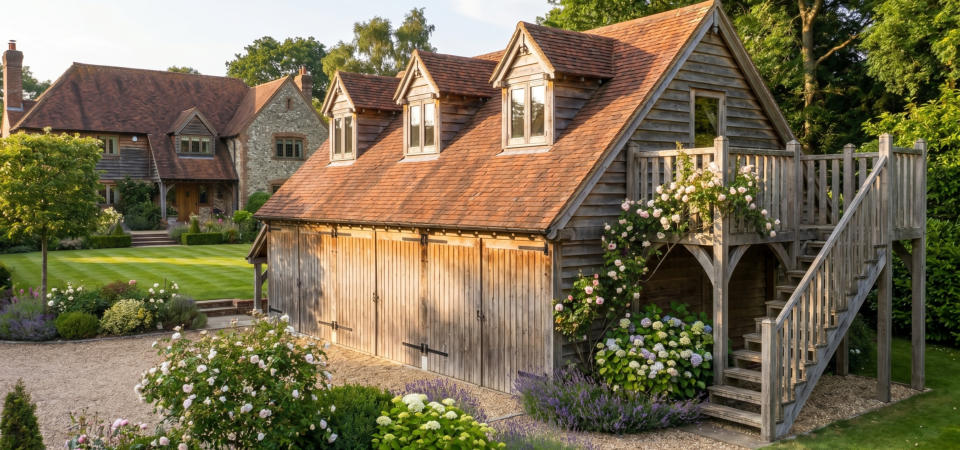
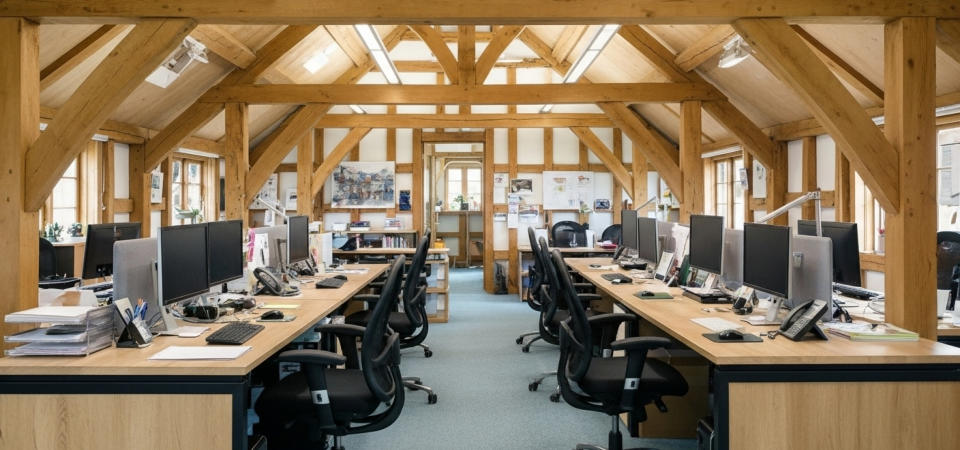
Oak is a dense, durable hardwood prized for its strength and beauty. Cutting and shaping it accurately is essential for good quality framing - especially for mortice and tenon joints, braces and beams in traditional oak framing.
The Traditional Craft of Cutting Oak Frames: Tools, Techniques, and Timeless Skill
For centuries, oak has been the wood of choice for builders and craftsmen seeking strength, beauty and endurance. From medieval halls to half-timbered cottages, oak frames have stood the test of time - not only because of the wood’s inherent durability but because of the remarkable skill of the artisans who shaped it. Long before computer-guided machines and power tools, oak frames were cut, joined and assembled entirely by hand. This process, though laborious, produced structures and furniture that were both functional and deeply expressive of human craftsmanship.Laying Out the Work
Every traditional oak frame begins with meticulous planning. Accuracy at this stage determines the success of every joint that follows. Carpenters used a combination of simple yet precise tools: the framing square to check right angles, a marking gauge to scribe parallel lines along the grain and a scribe knife or carpenter’s pencil to outline joints. For large beams, plumb bobs and chalk lines help establish true verticals and long straight references. Unlike modern digital layouts, these marks are not just guides - they’re part of a dialogue between craftsman and material. Each line considers the grain, knots, and natural movement of the oak itself.Cutting the Timber
The first cuts transform raw oak into usable timbers. Craftsmen traditionally use ripsaws for cuts along the grain and cross-cut saws for those across it. For large-scale framing, two-person pit saws or frame saws were employed, one worker above the beam and one below, labouring in rhythm. Because oak is dense and fibrous, these cuts demand patience and control. The carpenter saws just outside the marked line, leaving enough material for later refinement. The final accuracy is achieved with chisels, planes and other hand tools, never relying solely on the saw.Shaping the Joints
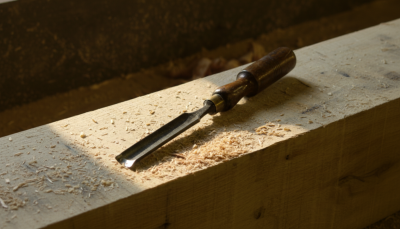
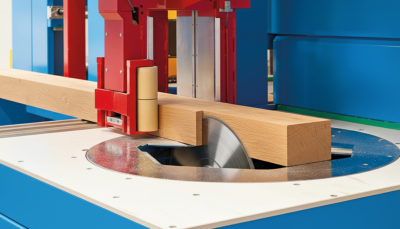
At the heart of any oak frame lies the joinery. Traditional joints - especially the mortice and tenon - are the defining features of this craft. They allow heavy timbers to interlock with remarkable strength, often without the need for nails or glue. The mortice, a rectangular cavity, is first bored using a brace and auger bit to remove waste material. The walls are then squared and cleaned using a mortice chisel, struck methodically with a wooden mallet. The tenon, a matching tongue on the adjoining timber, is shaped with a back saw or tenon saw, then refined with chisels and a shoulder plane for an exact fit. A properly made mortice and tenon joint fits so precisely that the parts almost “breathe” together - firm yet flexible enough to accommodate the wood’s natural expansion and contraction over the years. Over recent years, improvements in tools and the use of electricity allowed tenon machines to cut the tenon at the end of an oak post, hand held morticers were used to create the mortice - these are akin to small chainsaws which are quite spectacular to see in action.Hewing, Planing, and Finishing
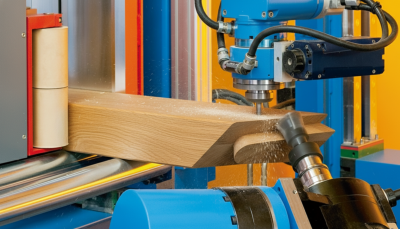
Once cut, the oak surfaces are trued and finished. Rough timbers are first hewn with a broad axe or adze, flattening the surface. Then, jack planes and jointer planes smooth the wood, removing tool marks and high spots. For curved or decorative sections, drawknives and spokeshaves allow for fine control. Unlike machine finishes, hand-planed oak retains a living texture. Subtle tool marks catch the light differently, giving the surface depth and warmth that cannot be replicated by modern machinery. However, modern CNC machines - computer driven large scale cutting tools allow for much greater volumes at greater speed and create millimetre perfect joints ensuring a perfect fit when the frame gets to site. All the cutting is done in the workshops leaving a simple assembly on site and very little shaving or sawdust debris.Assembly and Pegging
When all components are cut and shaped, the frame is dry-fitted - assembled without glue - to test alignment and ensure each joint fits perfectly. Peg holes are drilled using a brace and bit originally, often slightly offset to create a drawbore effect. This clever technique ensures that when the oak pegs (or “trenails”) are driven in, they pull the joint tightly together and lock it in place. No nails, screws, or adhesives are needed - the frame becomes a single, cohesive structure held by the precision of its joinery and the natural tension of the wood. Where buildings are to be used for habitable spaces, mastics and expandable dry lining tapes are used to ensure a watertight and airtight fit ensuring a comfortable environment.Preserving the Craft
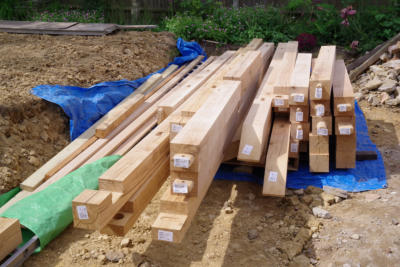
Traditional oak framing methods have survived not just because of their strength, but because they embody a philosophy of craftsmanship. These frames can last for centuries and when repair is needed, they can be disassembled and restored using the same principles with which they were made. In many historical buildings across Europe, the marks of these hand tools - the chisel scars, the adze strokes, the faint scribe lines - are still visible today. They serve as a testament to the artistry and human touch that shaped them. Today, the precision of CNC machines allow a confidence that the frame will fit together perfectly the day it arrives on site. There is no right or wrong in which method of construction is used but our belief is that the end user is more important that the carpenter’s love of this wonderful traditional trade, therefore we have chosen to use the modern method.Why It Endures
Even in an age of CNC machines and laser-guided cutters, many craftspeople continue to work with traditional tools. The reasons are as much philosophical as practical. Hand tools offer: • Connection to the material - every sound and resistance tells the craftsman something. • Control - delicate adjustments can be made instantly by feel. • Character - no two joints are ever exactly alike, and each bears the mark of its maker. Oak framing done by hand is not simply construction; it is a form of sculpture. Every mortice, tenon and peg reflects centuries of accumulated wisdom, passed from one pair of hands to the next. For our clients, we are sure that whilst the traditional methods are part of the charm, the knowledge that the frame will be delivered and labelled ready for assembly is a little more important and the short time on site ensures you can be enjoying your new oak building as soon as possible.



© 2016

Construction
Methods
Oak is a dense, durable hardwood prized for its strength and beauty. Cutting and shaping it accurately is essential for good quality framing - especially for mortice and tenon joints, braces and beams in traditional oak framing.The Traditional Craft of Cutting Oak Frames: Tools,
Techniques, and Timeless Skill
For centuries, oak has been the wood of choice for builders and craftsmen seeking strength, beauty and endurance. From medieval halls to half-timbered cottages, oak frames have stood the test of time - not only because of the wood’s inherent durability but because of the remarkable skill of the artisans who shaped it. Long before computer-guided machines and power tools, oak frames were cut, joined and assembled entirely by hand. This process, though laborious, produced structures and furniture that were both functional and deeply expressive of human craftsmanship.Laying Out the Work
Every traditional oak frame begins with meticulous planning. Accuracy at this stage determines the success of every joint that follows. Carpenters used a combination of simple yet precise tools: the framing square to check right angles, a marking gauge to scribe parallel lines along the grain and a scribe knife or carpenter’s pencil to outline joints. For large beams, plumb bobs and chalk lines help establish true verticals and long straight references. Unlike modern digital layouts, these marks are not just guides - they’re part of a dialogue between craftsman and material. Each line considers the grain, knots, and natural movement of the oak itself.Cutting the Timber
The first cuts transform raw oak into usable timbers. Craftsmen traditionally use ripsaws for cuts along the grain and cross-cut saws for those across it. For large-scale framing, two-person pit saws or frame saws were employed, one worker above the beam and one below, labouring in rhythm. Because oak is dense and fibrous, these cuts demand patience and control. The carpenter saws just outside the marked line, leaving enough material for later refinement. The final accuracy is achieved with chisels, planes and other hand tools, never relying solely on the saw.Shaping the Joints
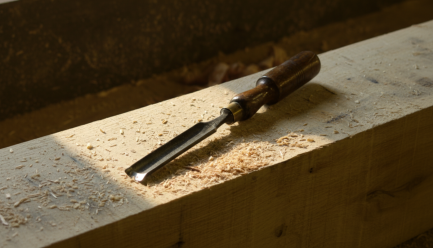
At the heart of any oak frame lies the joinery. Traditional joints - especially the mortice and tenon - are the defining features of this craft. They allow heavy timbers to interlock with remarkable strength, often without the need for nails or glue. The mortice, a rectangular cavity, is first bored using a brace and auger bit to remove waste material. The walls are then squared and cleaned using a mortice chisel, struck methodically with a wooden mallet. The tenon, a matching tongue on the adjoining timber, is shaped with a back saw or tenon saw, then refined with chisels and a shoulder plane for an exact fit. A properly made mortice and tenon joint fits so precisely that the parts almost “breathe” together - firm yet flexible enough to accommodate the wood’s natural expansion and contraction over the years. Over recent years, improvements in tools and the use of electricity allowed tenon machines to cut the tenon at the end of an oak post, hand held morticers were used to create the mortice - these are akin to small chainsaws which are quite spectacular to see in action.Hewing, Planing, and Finishing
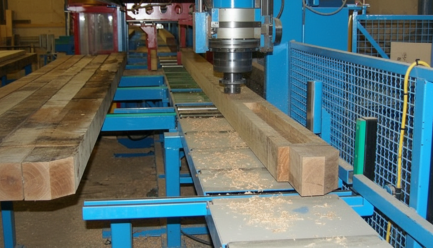
Once cut, the oak surfaces are trued and finished. Rough timbers are first hewn with a broad axe or adze, flattening the surface. Then, jack planes and jointer planes smooth the wood, removing tool marks and high spots. For curved or decorative sections, drawknives and spokeshaves allow for fine control. Unlike machine finishes, hand-planed oak retains a living texture. Subtle tool marks catch the light differently, giving the surface depth and warmth that cannot be replicated by modern machinery. However, modern CNC machines - computer driven large scale cutting tools allow for much greater volumes at greater speed and create millimetre perfect joints ensuring a perfect fit when the frame gets to site. All the cutting is done in the workshops leaving a simple assembly on site and very little shaving or sawdust debris.Assembly and Pegging
When all components are cut and shaped, the frame is dry-fitted - assembled without glue - to test alignment and ensure each joint fits perfectly. Peg holes are drilled using a brace and bit originally, often slightly offset to create a drawbore effect. This clever technique ensures that when the oak pegs (or “trenails”) are driven in, they pull the joint tightly together and lock it in place. No nails, screws, or adhesives are needed - the frame becomes a single, cohesive structure held by the precision of its joinery and the natural tension of the wood. Where buildings are to be used for habitable spaces, mastics and expandable dry lining tapes are used to ensure a watertight and airtight fit ensuring a comfortable environment.Preserving the Craft
Traditional oak framing methods have survived not just because of their strength, but because they embody a philosophy of craftsmanship. These frames can last for centuries and when repair is needed, they can be disassembled and restored using the same principles with which they were made. In many historical buildings across Europe, the marks of these hand tools - the chisel scars, the adze strokes, the faint scribe lines - are still visible today. They serve as a testament to the artistry and human touch that shaped them. Today, the precision of CNC machines allow a confidence that the frame will fit together perfectly the day it arrives on site. There is no right or wrong in which method of construction is used but our belief is that the end user is more important that the carpenter’s love of this wonderful traditional trade, therefore we have chosen to use the modern method.Why It Endures
Even in an age of CNC machines and laser-guided cutters, many craftspeople continue to work with traditional tools. The reasons are as much philosophical as practical. Hand tools offer: • Connection to the material - every sound and resistance tells the craftsman something. • Control - delicate adjustments can be made instantly by feel. • Character - no two joints are ever exactly alike, and each bears the mark of its maker. Oak framing done by hand is not simply construction; it is a form of sculpture. Every mortice, tenon and peg reflects centuries of accumulated wisdom, passed from one pair of hands to the next. For our clients, we are sure that whilst the traditional methods are part of the charm, the knowledge that the frame will be delivered and labelled ready for assembly is a little more important and the short time on site ensures you can be enjoying your new oak building as soon as possible.




 About
About
 Products
 Quotations
 Technical
 News
News
 Blog
Blog
 Inspiring Oak Frame Extension Ideas for Your Home
- Which Extension Style Should You choose?
 Jungle of Regulation Is Choking Small-Scale Development
 Is an Oak Frame Conservatory the Perfect Extension for Your Home?
 Oak Frame Flat Roof Extensions
 What should I consider when designing an oak frame extension?
 Contact
 Frequently Asked Questions
 Self Build
 Oak Frame Design
 Grades of Oak
 Longevity of Oak
 Services
 The Process
 Design Requirements
 Site Preparation
 Sustainability
 Construction Methods
 Feasibility Study
 Gallery
 Garages
 Single Storey Garages
 Two Storey Garages
 Garage Complexes
 Extensions
 Garden Rooms
 More Info
 Conservatories
 More Info
 Traditional Orangeries
 Mansard Orangeries
 Garden Buildings
 Annexes
 Entertainment Spaces
 Home Offices
 Shelters
 Pool Buildings
 Stables
 House Designs
 Commercial
 Barn Buildings
 Sport Buildings
 Bespoke Buildings
 Single Storey Garage
 Two Storey Garage
 Garden Rooms, Orangeries & Offices
 Design
 Architectural Design
 Case Studies
 Oak Framing History
 Glossary of Oak Framing
 Oak Patina
 Garage Frame Sections
 Cladding
 Planning
 Planning Reports
 Building Regulations
 Non-Designated Heritage Assets
 Caravan Sites
 Groundworks
 Assembly
 Supply Only Kits
 Turnkey Projects
 Joinery
 Glazing Options
 Lanterns
 Roof Works
 Roof Styles
 Roof Trusses
 Roof Tiling
 Albion Oak
 Employee of the Month
menu html5 by Css3Menu.com


© 2016 - Need help? Contact us on 07967 778808
